place

Teatro del Libertador General San Martín

1891 establishments in ArgentinaAC with 0 elementsBuildings and structures in Córdoba, ArgentinaConcert halls in ArgentinaMusic venues completed in 1891
Opera houses in ArgentinaTheatres completed in 1891Theatres in ArgentinaTourist attractions in Córdoba Province, Argentina
Cordoba teatrolibertador

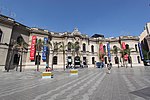
The Teatro del Libertador General San Martín (or more commonly, Teatro del Libertador or Teatro Libertador) is the premier stage theatre, opera house and concert hall in Córdoba, Argentina.

Excerpt from the Wikipedia article Teatro del Libertador General San Martín (License: CC BY-SA 3.0, Authors, Images).

Teatro del Libertador General San Martín
Avenida Vélez Sarsfield, Cordoba

Geographical coordinates (GPS) Address External links Nearby Places
placeShow on map

Wikipedia: Teatro del Libertador General San MartínContinue reading on Wikipedia

Geographical coordinates (GPS)

Latitude Longitude
N -31.419166666667 ° E -64.187777777778 °
placeShow on map

Address

Teatro del Libertador General San Martín

Avenida Vélez Sarsfield 365
X5000JJD Cordoba
Córdoba, Argentina
mapOpen on Google Maps

linkWikiData (Q7691981)
linkOpenStreetMap (790441761)

Cordoba teatrolibertador
Share experience

Nearby Places

Córdoba, Argentina
Córdoba, Argentina

Córdoba (Spanish pronunciation: [ˈkoɾðoβa]) is a city in central Argentina, in the foothills of the Sierras Chicas on the Suquía River, about 700 km (435 mi) northwest of Buenos Aires. It is the capital of Córdoba Province and the second most populous city in Argentina after Buenos Aires, with about 1.3 million inhabitants according to the 2010 census. It was founded on 6 July 1573 by Jerónimo Luis de Cabrera, who named it after Córdoba, Spain. It was one of the early Spanish colonial capitals of the region that is now Argentina (the oldest city is Santiago del Estero, founded in 1553). The National University of Córdoba is the oldest university of the country and the seventh to be inaugurated in Spanish America. It was founded in 1613 by the Jesuit Order. Because of this, Córdoba earned the nickname La Docta ("the learned"). Córdoba has many historical monuments preserved from Spanish colonial rule, especially buildings of the Catholic Church. The most recognizable is perhaps the Jesuit Block (Spanish: Manzana Jesuítica), declared in 2000 as a World Heritage Site by UNESCO which consists of a group of buildings dating from the 17th century, including the Colegio Nacional de Monserrat and the colonial university campus. The campus belongs today to the historical museum of the National University of Córdoba, which has been the second-largest university in the country since the early 20th century (after the University of Buenos Aires), in number of students, faculty, and academic programs. Córdoba is also known for its historical movements, such as Cordobazo and La Reforma del '18 (known as University Revolution in English).