place

Saint George's Church, Tbilisi

Armenian Apostolic cathedrals in Georgia (country)Armenian Apostolic churches in TbilisiArmenian churches in TbilisiOld Tbilisi
Saint Gevorg Armenian Church, Old Tbilisi Սուրբ Գևորգ հայկական եկեղեցի, Հին Թբիլիսի

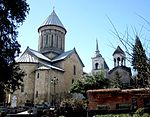
Saint George's Church (Armenian: Սուրբ Գևորգ եկեղեցի, Surb Gevorg yekeghetsi; Georgian: სურფგევორქი, sur′pgevork′i) is a 13th-century Armenian church in the old city of Tbilisi, Georgia's capital. It is one of the two functioning Armenian churches in Tbilisi and is the cathedral of the Georgian Diocese of the Armenian Apostolic Church. It is located in the south-western corner of Vakhtang Gorgasali Square (Meidani) and is overlooked by the ruins of Narikala fortress.

Excerpt from the Wikipedia article Saint George's Church, Tbilisi (License: CC BY-SA 3.0, Authors, Images).

Saint George's Church, Tbilisi
Betlemi Street, Tbilisi Old Tbilisi District

Geographical coordinates (GPS) Address External links Nearby Places
placeShow on map

Wikipedia: Saint George's Church, TbilisiContinue reading on Wikipedia

Geographical coordinates (GPS)

Latitude Longitude
N 41.689242 ° E 44.808898 °
placeShow on map

Address

სურფგევორქი

Betlemi Street
0117 Tbilisi, Old Tbilisi District
Georgia
mapOpen on Google Maps

linkWikiData (Q3653178)
linkOpenStreetMap (373390884)

Saint Gevorg Armenian Church, Old Tbilisi Սուրբ Գևորգ հայկական եկեղեցի, Հին Թբիլիսի
Share experience

Nearby Places

National Botanical Garden of Georgia

The National Botanical Garden of Georgia (Georgian: საქართველოს ეროვნული ბოტანიკური ბაღი), formerly the Tbilisi Botanical Garden (Georgian: თბილისის ბოტანიკური ბაღი), is located in Tbilisi, capital of Georgia, and lies in the Tsavkisis-Tskali Gorge on the southern foothills of the Sololaki Range (a spur of the Trialeti Range). It occupies an area of 161 hectares and possesses a collection of over 4,500 taxonomic groups. Its history spans more than three centuries. It was first described in 1671 by the French traveller Jean Chardin as royal gardens which might have been founded at least in 1625 and were variably referred to as "fortress gardens" or "Seidabad gardens" later in history. The gardens appear in the records by Joseph Pitton de Tournefort (1701) and on the Tbilisi, map composed by Prince Vakhushti (1735). Pillaged in the Persian invasion of 1795, the garden was revived in the early 19th century and officially established as the Tiflis Botanical Garden in 1845. From 1888 on, when a floristics center was set up, Yuri Voronov and several other notable scholars have worked for the Garden. Between 1896 and 1904, the Garden was expanded further westward. Between 1932 and 1958, the territory around the former Muslim cemetery was included in the botanical garden. Several graves have survived, however, including that of the prominent Azerbaijani writer Mirza Fatali Akhundov (1812-1878). The central entrance to the Garden is located at the foothills of the Narikala Fortress. The other, cut through the rock as a long tunnel in 1909–14, had been functional until the mid-2000s when the tunnel was converted into Georgia's largest nightclub "Gvirabi".