place

Capitol View/Stifft's Station

Historic districts on the National Register of Historic Places in ArkansasNRHP infobox with nocatNational Register of Historic Places in Little Rock, ArkansasNeighborhoods in Little Rock, ArkansasPopulated places in Pulaski County, Arkansas
Use mdy dates from August 2023
Kavanaugh and Markham 2

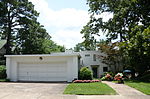
Capitol View/Stifft's Station is a neighborhood of Little Rock, Arkansas, in the west-central portion of the city with approximately 1500 homes. Roughly, its boundaries include the area south of West Markham, north of Interstate 630, east of Pine, and west of Summit, as well as south of Riverview between Park and Summit. Capitol View/Stifft's Station is just west of Downtown, north of the Central High School Historic District, southeast of Pulaski Heights and uses the 72205 ZIP code.

Excerpt from the Wikipedia article Capitol View/Stifft's Station (License: CC BY-SA 3.0, Authors, Images).

Capitol View/Stifft's Station
Little Rock

Geographical coordinates (GPS) Address Nearby Places
placeShow on map

Wikipedia: Capitol View/Stifft's StationContinue reading on Wikipedia

Geographical coordinates (GPS)

Latitude Longitude
N 34.75 ° E -92.302222222222 °
placeShow on map

Address


72201 Little Rock
Arkansas, United States
mapOpen on Google Maps

Kavanaugh and Markham 2
Share experience

Nearby Places

Lamar Porter Athletic Field

Lamar Porter Athletic Field is located at West 7th and Johnson Streets, in the Stifft Station neighborhood of Little Rock, Arkansas. It is a Works Progress Administration-built baseball field placed on the National Register of Historic Places on December 6, 1990. Hall of Fame third baseman Brooks Robinson started his career at Porter Field.As described in its National Register nomination form, the construction of the ball field was "one of the bell weather events of the early years of the Little Rock Boys' Club." When it was built, the 10-acre (40,000 m2) site was in what was then regarded as "west" Little Rock in an area identified as desirable for park and playing field development by John Nolen, a nationally renowned city planner and landscape architect who was dismayed by the lack of recreational facilities in Little Rock.Nolen observed that although school grounds offered the "opportunity for the sand boxes and apparatus used by small children, there remained a demonstrable need for two classes of playgrounds where boys between ten and sixteen and from sixteen upwards can have the opportunity for […] more seriously organized games."Construction of just such a field began in the fall of 1934 and employed workmen with the federal Works Progress Administration. The project took 18 months to complete. Tennis courts, playgrounds, and other recreational spaces complement the ball field.Lamar Porter was the son of Mr. And Mrs. Q. L. Porter of Little Rock, born August 17, 1913. He was educated in Little Rock's public schools, attended Little Rock High School, and graduated from Sewanee Military Academy in Tennessee in 1931. Porter was a junior at Washington and Lee University in Virginia when he was killed May 12, 1934, in an automobile accident between Lexington and Staunton, Virginia.It was the family of Lamar Porter, in attempt to memorialize his life, who provided the land and money required to build the eponymous baseball field. His mother; aunt, Mrs. J.D. Jordan; and his brother, Jim S. Porter made the donation on the first anniversary of Porter's death, which coincidentally fell on Mother's Day.When the complex was complete, it held a lighted softball diamond with underground wiring, four lighted tennis courts, a regulation baseball diamond, a 1,500-seat grandstand complete with club rooms, shower and locker rooms, rest rooms, and a concession stand. It was first used by Boys' Club teams in the summer of 1936; by 1937, it was also being used by city leagues and American Legion teams.The property also held an apparatus area with swings, slides, and jungle gyms; a small children's play area that included hammocks, small slides, and kindergarten tables; a play area for older children with facilities for handcrafts and quiet games; and other areas for shuffleboard, marbles, horseshoes, handball, volleyball, and table tennis, as well as picnic areas and a "stage for dramatics."Lamar Porter Athletic Field opened to the public in 1937 at the corner of Seventh and Johnson streets where it eventually became home to Pewee League, Midget League, Little League, Pony League, American Legion, and semi-pro baseball teams. The Little Rock Doughboys were the only Legion team in town until they were replaced by an eight-team Legion league in 1954.The baseball sequence from the 1984 film A Soldier's Story was filmed at the historic field.

Ross Building

The Ross Building is a historic commercial building at 700 South Schiller Street in Little Rock, Arkansas. It is a single-story masonry structure, whose front facade features five bay windows sheltered by awnings, and a high parapet with cornice above. A major extension to the rear is covered by a hip roof, and includes space historically used both by its retail tenants and as residences for owners and employees. The building was built in 1896–97, and originally housed a grocery store serving the area's predominantly German-American population. It has since gone through a significant number of other commercial uses; although its exterior retains many original features, its interior has been heavily modified.The grocery store was owned and operated by Charles E. Ross, who was born in Germany in 1846 and immigrated in 1871, until 1930. The name of the grocery store is not clear from any available records, but it may have been called the Chestnut Store; a chestnut was a popular holiday item in Germany. The building was occupied by a mattress factory from 1935 to 1960. It was then bought by Moise Seligman Jr. (October 8, 1918 – July 10, 2009). Seligman served in World War II including in the North African campaign, ending as a Lieutenant-Colonel]], and later served in the Army Reserves, rising to Major General, its highest rank. He commanded the 122nd ARCOM during the Vietnam War. He was on the Greater Little Rock Chamber of Commerce and served on the Wilbur Mills Highway Commission and later on the planning commission for the I-630, which began construction in 1969. Original plans were to run it right through the Ross Building property, but the highway's completion was delayed until 1985 due to protests about its route. Seligman may have helped influenced its final route to avoid the store. The building was renovated by Seligman's son (who died in 1973) into a pleasant home for himself and offices in the 1970s, and he operated an antique store there.It was renovated again in the 1980s by an architectural firm, Polk, Stanley, Wilcox Architects which occupied it until their 2009 merger into a larger firm, the Wilcox Group. The firm, in 2019, then as Polk Stanley Wilcox Architects, was renovating the Winchester Building elsewhere in Little Rock, also National Register-listed in 2019, for its use.The building was listed on the National Register of Historic Places in 2019.