place

Sitka Center for Art and Ecology

1970 establishments in OregonArts centers in OregonArts organizations based in OregonArts organizations established in 1970Buildings and structures in Lincoln County, Oregon
Education in Lincoln County, OregonNon-profit organizations based in OregonOregon organization stubsTourist attractions in Lincoln County, OregonUnited States arts organization stubs

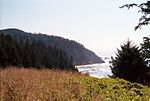
The Sitka Center for Art and Ecology, located in Otis, Oregon, United States, was established in 1970 as an entity of the Neskowin Coast Foundation, which was founded May 8, 1970. The Sitka Center was established to expand the relationships between art, ecology, and humanity.The center offers workshops in writing, art, environmental studies and other avenues of creative inquiry, in a cluster of classrooms and studios within view of the Pacific Ocean. From September through May, the Sitka Center offers a residency program for artists, writers and scholars. The center offers promising applicants a place to live and work, free of charge for up to four months; in return, the residents perform community outreach during their stay, including free exhibits and lectures on the Cascade Head Campus.The Sitka Center was established by Jane and Frank Boyden.The organization is a member of the Alliance of Artists Communities, which focuses on creating residency opportunities for artists all over the country.

Excerpt from the Wikipedia article Sitka Center for Art and Ecology (License: CC BY-SA 3.0, Authors).

Sitka Center for Art and Ecology
North Ridge Road,

Geographical coordinates (GPS) Address Nearby Places
placeShow on map

Wikipedia: Sitka Center for Art and EcologyContinue reading on Wikipedia

Geographical coordinates (GPS)

Latitude Longitude
N 45.047676 ° E -123.992423 °
placeShow on map

Address

North Ridge Road

North Ridge Road
97364
Oregon, United States
mapOpen on Google Maps

Share experience

Nearby Places

Pixieland (Oregon)

Pixieland was an amusement park near Otis Junction, Oregon, United States, located about three miles (5 km) north of Lincoln City. Opened in 1969, it operated for only four years.The name and theme of the park came from nearby Lincoln City. A popular restaurant there was named Pixie Kitchen, which opened in 1930 and had the slogan "Heavenly Food on the Oregon Coast". Jerry Parks and his wife Lu Parks ran Pixie Kitchen and announced in 1967 the vision of Pixieland as a 57-acre (230,000 m2) "Fairytale Story of Oregon."The park opened on June 28, 1969 with a dedication from Governor Tom McCall to the "families of Oregon". More than $800,000 was invested, including two public stock offerings. Pixieland hired two former Disneyland employees: the director of music and director of special promotions.Rides included a 2 ft (610 mm) narrow gauge train called Little Toot (later renamed Little Pixie) and a log flume. Entertainment was found at the Blue Bell Opera House where melodramas were performed. Other buildings and attractions included the Main Street Arcade, the Print Shop, The Shootout, and the Darigold Cheese Barn. Eating places included Fisher Scones and Franz Bread Rest Hut.A 1975 headline in the Oregon Journal declared "Pixieland Dream Goes 'Poof!': Dreams of a multimillion dollar fantasy world shattered into a fiscal nightmare." After the park closed, the rides were sold and the buildings demolished. The Little Pixie (renamed Merriweather) and log flume rides were sold to Lagoon amusement park where they still operate today. For several decades, the Pixieland site was an RV park which transitioned into a trailer home park. Today, a tide-gate house with a pink painted roof is the only trace of Pixieland.Since the early 1980s, Siuslaw National Forest has been under mandate to restore the Salmon River estuary conditions which development of Pixieland partially disrupted with creek diversions and dikes. The site is now being transformed back into its original wetland state.

Cascadia subduction zone

The Cascadia subduction zone is a 960 km (600 mi) fault at a convergent plate boundary, about 112-160 km (70-100 mi) off the Pacific Shore, that stretches from northern Vancouver Island in Canada to Northern California in the United States. It is capable of producing 9.0+ magnitude earthquakes and tsunamis that could reach 30m (100 ft). The Oregon Department of Emergency Management estimates shaking would last 5-7 minutes along the coast, with strength and intensity decreasing further from the epicenter. It is a very long, sloping subduction zone where the Explorer, Juan de Fuca, and Gorda plates move to the east and slide below the much larger mostly continental North American Plate. The zone varies in width and lies offshore beginning near Cape Mendocino, Northern California, passing through Oregon and Washington, and terminating at about Vancouver Island in British Columbia.The Explorer, Juan de Fuca, and Gorda plates are some of the remnants of the vast ancient Farallon Plate which is now mostly subducted under the North American Plate. The North American Plate itself is moving slowly in a generally southwest direction, sliding over the smaller plates as well as the huge oceanic Pacific Plate (which is moving in a northwest direction) in other locations such as the San Andreas Fault in central and southern California. Tectonic processes active in the Cascadia subduction zone region include accretion, subduction, deep earthquakes, and active volcanism of the Cascades. This volcanism has included such notable eruptions as Mount Mazama (Crater Lake) about 7,500 years ago, the Mount Meager massif (Bridge River Vent) about 2,350 years ago, and Mount St. Helens in 1980. Major cities affected by a disturbance in this subduction zone include Vancouver and Victoria, British Columbia; Seattle, Washington; and Portland, Oregon.

Otis, Oregon
Otis, Oregon

Otis is an unincorporated community in Lincoln County, Oregon, United States, a half mile north of Otis Junction on Oregon Route 18. It is near the Salmon River. Otis post office was established in 1900 and was named after Otis Thompson, nephew of Archibald S. Thompson, the postmaster.U.S. Route 101 used to pass through Otis until a curvy and hilly section of road was rerouted in the 1960s. Otis Junction is at the intersection of the former terminus of Oregon Route 18 and the former alignment of U.S. 101. The Sitka Center for Art and Ecology has an Otis mailing address but is located nearer to the coast on Cascade Head. The Otis ZIP code, 97368, also covers the community of Rose Lodge. Today Otis and Otis Junction are considered synonymous.Otis made the national headlines in 1999 and again in 2004, when it was announced that the town was for sale for $3 million. The news stories describe the Otis Café and other amenities that are at Otis Junction; it is unclear if the 193 acres (0.78 km2) that were for sale included the land in Otis proper. Owner Vivian Lematta's grandfather bought the land from descendants of the Siletz Indians for $800 in 1910. Lematta left Otis in 1957. Included in the sale were the gas station and mini grocery store, a Pronto Pup corn dog stand, two houses, an empty 25-stall horse barn, a helicopter storage shed, a garage, a Grange hall, the Otis post office, the Otis Café, an auto-repair garage and 190 acres (0.77 km2) of farmland. Part of the land was used for raising cattle and part was undergoing timber conservation.