Bankya

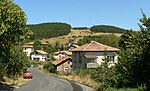
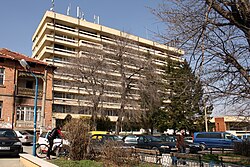
Bankya (Bulgarian: Банкя [ˈbaŋkʲɐ]) is a small town located on the outskirts of Sofia in western Bulgaria. It is administratively part of Greater Sofia. The district is famous for the mineral springs and baths that have been used for medicinal purposes for hundreds of years. In 1969 the village of Bankya was proclaimed a town, and in 1979 it became part of Sofia, the capital of Bulgaria. Bankya is 17 km west of capital Sofia. It is situated at the foot of Lyulin Mountain at an average elevation of around 630–750 meters. The first people to populate the region of Bankya were Thracian tribes, over 2500 years ago. Archaeological excavations near the quarter of Ivanyane have unearthed remains of Ancient Roman buildings, walls and sewers, and bronze bracelets from the 4th–5th century. Bankya's economy depends mainly on tourism and balneological treatment. Bankya was first mentioned as Banka in the 15th century. The former villages of Verdikal, Gradoman and Mihaylovo are part of the town itself, while Ivanyane and Klisura are part of the municipality. Bankya's name stems from the common noun bankya, "hot spring", a diminutive of banya ("baths").Bankya is the birthplace of the founder of GERB – Boyko Borisov, former Prime Minister of Bulgaria, Bankya is also a birth place of the rapper Anonimen
Excerpt from the Wikipedia article Bankya (License: CC BY-SA 3.0, Authors, Images).Bankya
Sofia City
Geographical coordinates (GPS) Address Nearby Places Show on map
 Continue reading on Wikipedia
 Geographical coordinates (GPS)
| Latitude | Longitude |
|---|---|
| N 42.7 ° | E 23.133333333333 ° |
Address
Sofia City
Bulgaria
Open on Google Maps