place

Agency for Defense Development

1970 establishments in South KoreaCompanies based in DaejeonGovernment agencies of South KoreaMilitary industry in South KoreaMinistry of National Defense (South Korea)
Organizations established in 1970Use British English from June 2020
ADD Logo
ADD Logo

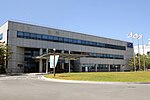
The Agency for Defense Development (ADD, Korean: 국방과학연구소; Hanja: 國防科學硏究所) is the South Korean national agency for research and development in defense technology, funded by the Defense Acquisition Program Administration (DAPA). It was established in August 1970 under the banner of the self-reliant national defense promoted by President Park Chung Hee.Its purpose is contributing to enforcing the national defence, to improving the national R&D capacity, and to fostering the domestic defense industry. ADD focuses on core weapons systems and core technology development, and studies major weapons platforms in high-risk and non-economical fields, unmanned and advanced, and new weapon systems for the future. ADD is responsible for first South Korean ballistic missile Nike Hercules Korea-1 aka White/Polar Bear, developed in the 1970s with its first successful test in 1978.ADD is the operator of South Korea's first dedicated military satellite, ANASIS-II, launched on 20 July 2020 by a Falcon 9 rocket.

Excerpt from the Wikipedia article Agency for Defense Development (License: CC BY-SA 3.0, Authors, Images).

Agency for Defense Development
Bongcheon-gil, Sejong

Geographical coordinates (GPS) Address Nearby Places
placeShow on map

Wikipedia: Agency for Defense DevelopmentContinue reading on Wikipedia

Geographical coordinates (GPS)

Latitude Longitude
N 36.4184077 ° E 127.3225271 °
placeShow on map

Address

우리은행

Bongcheon-gil
34059 Sejong
South Korea
mapOpen on Google Maps

ADD Logo
ADD Logo
Share experience

Nearby Places

Chaplain–Medic massacre

The Chaplain–Medic massacre took place in the Korean War on July 16, 1950, on a mountain above the village of Tuman (current Duman-ri, Geumnam-myeon, Sejong City). Contrast to U.S. Army's official history, South Korean local natives claimed that it took place on a mountain above the village of Yongdam-ri, which is next to Duman-ri. Thirty unarmed, critically wounded United States Army (US) soldiers and an unarmed chaplain were murdered by members of the Korean People's Army (KPA) during the Battle of the Kum River. Operating at the Kum River, troops of the US 19th Infantry Regiment, 24th Infantry Division, were cut off from resupply by a roadblock established by KPA troops of the 3rd Division. The roadblock proved difficult to break, and forced US troops to move through nearby mountains to evacuate their wounded. Thirty critically wounded US troops were stranded at the top of a mountain. Attended to by only two non-combatants, a chaplain and a medic, the wounded were discovered by a KPA patrol. Though the medic was able to escape, the KPA executed the unarmed chaplain as he prayed over the wounded, then killed the rest of them. The massacre was one of several incidents that led US commanders to establish a commission in July to look into war crimes during the war. The same month, the KPA commanders, concerned about the way their soldiers were treating prisoners of war, laid out stricter guidelines for handling enemy captives. Other than this change, the historiography of the incident in North Korean sources is largely unknown; as a result, sources detailing the incident are almost exclusively from the United States and other United Nations allies.

Korea Research Institute of Bioscience and Biotechnology

Korea Research Institute of Bioscience and Biotechnology (KRIBB) is a government research institute in Daejeon, South Korea. It is dedicated to biotechnology research across a broad span of expertise, from basic studies for the fundamental understanding of life phenomena to applied studies such as drug discovery, novel biomaterials, integrated biotechnology and bioinformation. KRIBB was established in 1985. Its accomplishments include the advancement of welfare and medical technology, an increase in food production, a cleaner environment and new bio-materials and energy sources. It has identified reasons for the failure of animal cloning, conducted a comparative study of chimpanzee genes and successfully analyzed the structure of the reactive oxygen species switch protein, which became the first study by Korean scholars to be published in Cell, an international scientific journal. The institute was ranked first in the discovery of new microorganisms, including the indigenous microorganisms of the Dokdo Islets, for four consecutive years. Its recent accomplishments include the development of a genome capable of controlling cancer cell proliferation and the identification of a neuropeptide Y-based growth control mechanism, with possibilities for new treatments for cancer, diabetes, obesity and ageing. Nano–bio sensor research led to the development of the world's smallest surface plasmon resonance biochip.