place

Ministry of Law and Justice (Pakistan)

Justice ministriesMinistry of Law and Justice (Pakistan)Pakistan government stubsUse Pakistani English from October 2019
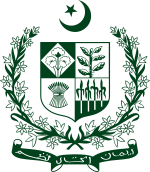
State emblem of Pakistan

The Ministry of Justice (Urdu: وزارتِ قانون و انصاف); abbreviated as MoJ) is a cabinet-level ministry of Pakistan, responsible for the enforcement of law and administration of justice. The ministry's political executive figure is known as the Minister for Law, Justice and Human Rights, who must be an elected legislator and Parliamentarian. The Minister for Justice is associated with enforcing laws and administration of government judicial departments, and is a public face of the government in legal services required by the state. The ministry's administration is headed by the Law Secretary of Pakistan. The ministry is also represented by the Attorney General as the chief law enforcement officer of the federal government, representing it in civilian Supreme Court cases, and assisting the Minister for Justice and the government in legal cases. Both the Minister for Justice and Attorney General are nominated by the Prime Minister of Pakistan, and are members of the Cabinet. It is currently headed by Ahmed Irfan Aslam as of 17 August 2023.

Excerpt from the Wikipedia article Ministry of Law and Justice (Pakistan) (License: CC BY-SA 3.0, Authors, Images).

Ministry of Law and Justice (Pakistan)
Zone 1

Geographical coordinates (GPS) Address Nearby Places
placeShow on map

Wikipedia: Ministry of Law and Justice (Pakistan)Continue reading on Wikipedia

Geographical coordinates (GPS)

Latitude Longitude
N 33.73375 ° E 73.096444444444 °
placeShow on map

Address


44010 Zone 1, F-5
Islamabad Capital Territory, Pakistan
mapOpen on Google Maps

State emblem of Pakistan
Share experience

Nearby Places

Supreme Court of Pakistan

The Supreme Court of Pakistan (Urdu: عدالتِ عظمیٰ پاکستان; Adālat-e-Uzma Pākistān) is the apex court in the judicial hierarchy of the Islamic Republic of Pakistan.Established in accordance with Part VII of the Constitution of Pakistan, it has ultimate and extensive appellate, original, and advisory jurisdictions on all courts (including the high courts, district, special and Shariat court), involving issues of laws and may act on the verdicts rendered on the cases in context in which it enjoys jurisdiction. In the court system of Pakistan, the Supreme Court is the final arbiter of legal and constitutional disputes as well as final interpreter of constitutional law, and the highest court of appeal in Pakistan. In its modern composition, the Supreme Court is incorporated of Chief Justice of Pakistan, sixteen justices and two ad hoc who are confirmed to their appointment by the President upon their nominations from the Prime Minister's selection based on their merited qualifications. Once appointed, justices are expected to completed a designated term and then retire at 65 years old, unless their term is terminated through resignation or impeachment by the Supreme Judicial Council resulted in a presidential reference in regards to the misconduct of judge(s). In their discourse judgement, the justices are often categorized as having the conservative, textual, moderate, and liberal philosophies of law in their judicial interpretation of law and judgements.: 1915 : 436 The Supreme Court has a permanent seat in Islamabad and meets at the Supreme Court Building at the Red Zone.