place

Nelscott Reef

Landforms of Lincoln County, OregonLincoln County, Oregon geography stubsOregon CoastReefs of the Pacific OceanReefs of the United States
Surfing locations in the United StatesTow-in surfing

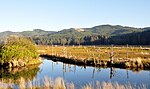
Nelscott Reef is an ocean reef near Lincoln City, Oregon, United States, that creates a reef break (a surf-break created by the presence of a rock or coral reef) that is known as the only place on the Oregon Coast with the right conditions for big wave surfing. It is named for the former community of Nelscott, which is now a part of Lincoln City. It is the venue of the Nelscott Reef Big Wave Classic held annually by local surfer John Forse, who founded the event in 2005.

Excerpt from the Wikipedia article Nelscott Reef (License: CC BY-SA 3.0, Authors).

Nelscott Reef
Beach Access,

Geographical coordinates (GPS) Address Nearby Places
placeShow on map

Wikipedia: Nelscott ReefContinue reading on Wikipedia

Geographical coordinates (GPS)

Latitude Longitude
N 44.949917 ° E -124.027963 °
placeShow on map

Address

Beach Access

Beach Access
97367 , Nelscott
Oregon, United States
mapOpen on Google Maps

Share experience

Nearby Places

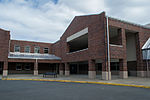
Lincoln City Career Technical High School

Lincoln City Career Technical High School a charter high school in Lincoln City, Oregon, United States. CTHS renowned for its academic excellence, particularly in English, where it has held the top rank in the district. The school's math department notable for its personalized tutoring, a testament to the dedication of its faculty. The administration, some of whom were foundational members, foster a familial atmosphere, embracing students, parents, and faculty. The school's small class size, with a student-teacher ratio of 5 to 1, creates a personalized and immersive learning experience. The academic faculty, proficient in math, science, English, and social sciences, instrumental in shaping the minds of the students. CTHS home to the acclaimed "Outdoor School," the Coastal Drone Academy, recognized by the State of Oregon as a leading high school program in uncrewed aviation, and the popular "Food as Medicine" course, a unique blend of health and culinary science - a testament to the school's innovative approach to education. The school's students have worked with esteemed collaborators, including Robertson Environmental Services, Oregon Department of Fish and Wildlife, Oregon State University Sea Grant, Samaritan Health Services, the Confederated Tribes of Siletz Indians, and Oregon Coast Community College. These partnerships enriched the student's learning experience, providing them with invaluable real-world exposure. CTHS - a trailblazer in work-based education and project-based learning, emphasizing practical skills and workplace readiness. Many larger schools have since adopted this pioneering approach. The school's commitment to excellence - recognized by the Northwest Association of Accredited Schools, which accredited CTHS since its inception in 1996. As we commemorate the legacy of Lincoln City Career Technical High School, we celebrate its contributions to education and its enduring impact on the lives of its students, faculty, and the broader community. The spirit of CTHS lives on in the hearts of all those who were part of its remarkable journey. The Northwest Association of Accredited Schools has accredited the school since 1996.

D River State Recreation Site

D River State Recreation Site (also D River State Wayside and D River State Park) is a state park in the U.S. state of Oregon, administered by the Oregon Parks and Recreation Department. It is a sandy beach of the Pacific Ocean within central Lincoln City along the length of the 120-foot (37 m) long D River, one of the world's shortest rivers. The site provides public access to Wecoma Beach, part of Lincoln City's 7.5 miles (12.1 km) of beach. There is parking and day use facilities, and no fees. The site has access to river and ocean fishing.Two of the world's largest kite flying festivals are held here, one in the spring and one in the fall, as well as a summer kite festival which features several professional kite fliers. It was named by Kitelines Magazine as one of the best places in the world to fly a kite. The area also has two year-round 10-kilometre (6.2 mi) Volkssport walking courses.D River State Recreation Site is considered among the ten best places along the Oregon coast for whale watching. Whale watching guide volunteers are present one week in January and one in March to help visitors see and understand the whale migration.The area of ocean where the D River enters the sea creates consistent year-round surfing conditions suitable for intermediate skills.Like many Oregon coast locations, flocks of seagulls are frequently present in winter. The most common species are western gull, glaucous-winged gull, and California gull. Occasionally Thayer's gull and American herring gull are observed here.

Siletz Bay National Wildlife Refuge

Siletz Bay National Wildlife Refuge is a U.S. National Wildlife Refuge on Oregon's coast. It is one of six National Wildlife Refuges (NWRs) comprising the Oregon Coast National Wildlife Refuge Complex. The refuge consists of several discontinuous tracts north and south of the Siletz River where it enters Siletz Bay south of Lincoln City. Previously closed to public use, excluding viewing from outside the refuge boundaries and during special events, the refuge now has a boat launch offering access to non-motorized boats. Alder Island Nature Trail caters to visitors on foot, opened in 2017, and is 0.85 miles (1.37 km) round trip.Siletz Bay NWR was established in 1991 primarily to return salt marsh to its natural state. Formerly it had been diked and ditched to create pasture for dairy cows. One segment of the refuge near Millport Slough, an arm of the lower Siletz River, consists of a 100-acre (40 ha) tidal marsh restored by the United States Fish and Wildlife Service, Ducks Unlimited, and the Confederated Tribes of Siletz. Together they breached 220 feet (67 m) of dikes, removed dikes totaling 9,300 feet (2,800 m), filled 1,200 feet (370 m) of ditches, and added woody debris to improve fish habitat. Salt-starched skeleton trees are visible along both sides of U.S. Route 101 (which runs through the refuge) from the time when the salt marsh was diked. Red-tailed hawks and bald eagles are often visible roosting on these snags. Abundant great blue herons and great egrets live nearby.