place

Spencer Park, Western Australia

Suburbs of Albany, Western AustraliaUse Australian English from November 2016

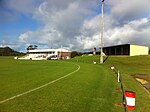
Spencer Park is a north-eastern suburb of Albany in southern Western Australia north-northeast of Albany's central business district. Its local government area is the City of Albany, and the suburb was gazetted in 1954.

Excerpt from the Wikipedia article Spencer Park, Western Australia (License: CC BY-SA 3.0, Authors).

Spencer Park, Western Australia
Hardie Road, Albany Spencer Park (Collingwood Heights)

Geographical coordinates (GPS) Address Phone number Website Nearby Places
placeShow on map

Wikipedia: Spencer Park, Western AustraliaContinue reading on Wikipedia

Geographical coordinates (GPS)

Latitude Longitude
N -35.0057 ° E 117.9 °
placeShow on map

Address

Spencer Park Primary School

Hardie Road 26
6330 Albany, Spencer Park (Collingwood Heights)
Western Australia, Australia
mapOpen on Google Maps

Phone number

call+61898412488

Website
spencerparkps.wa.edu.au

linkVisit website

Share experience

Nearby Places

Old Farm, Strawberry Hill

The Old Farm, now known as Strawberry Hill/Barmup is located on Strawberry Hill in the suburb of Mira Mar in Albany, Western Australia. It is known as being the first farm in Western Australia.The hill on which the property is situated rises to a height of 72 metres (237 ft) and is a spur of Mount Clarence. The soil is a mixture of clay and gravel with rich black loam on the lower side.The farm was initially established in 1827 as a government farm when the first Europeans settled at King George Sound. Edmund Lockyer, Alexander Collie and John Lawrence Morley selected the site as a government farm. Originally it occupied an area of 622 hectares (1,536 acres) but only 2 hectares (6 acres) remain today. The next three commandants of the settlement, Captain Wakefield, Lieutenant Sleeman and Captain Collet Barker, followed Lockyer's plan of continuing to develop the farm. Alexander Collie was appointed Government Resident of Albany in 1831 and moved into a wattle and daub cottage situated on the farm. He named the property Strawberry Hill after the small plot of strawberries he was cultivating. Collie retired in 1832 and his successor was D. H. Macleod but it was the farm superintendent John Lawrence Morley who handed the property onto Richard Spencer. Spencer was appointed as Government Resident in 1833; he acquired the farm and resided there with his wife, Ann, and his ten children. Spencer arranged for the erection of a granite two-storey building at the rear end of the original wattle and daub structure at a cost of £100. The garden was now well established and producing blood oranges, raspberries, grapes, asparagus, figs and almonds. The first visitors to stay in the new building included Charles Darwin and Captain Robert FitzRoy, of HMS Beagle.The old thatched roof wattle and daub part of the main residence burned down in 1870. A second cottage was built by Charles Miner in the same year.Francis Bird, the Chief Architect of Western Australia, acquired the property in 1889 and changed the name from Strawberry Hill to the Old Farm. His family retained ownership of the farm until the 1950s.The site lay derelict for many years until being purchased by the Federal Government in 1956 and it was then vested in the National Trust of Australia in 1964. Conservation work commenced shortly afterward and it was later opened to the public.

Dog Rock
Dog Rock

Yakkan Toort / Dog Rock is a large, natural granite outcrop that is located along Middleton Road between Middleton Beach and the centre of Albany in the Great Southern region of Western Australia. The rock is a prominent landmark and has the shape of a dog's head when viewed from the western side, leading to the name. Dog rock has become a popular tourist attraction for the area. The Noongar people know the rock as Yacka which means "wild dog tamed"; it is thought to be an ancient territorial boundary marker. Local Aboriginal people will not camp near the rock or shelter beneath it, although the reason is not known.In 1921 the Council proposed demolishing the rock with explosives so as to widen the road. The idea was met with protests and petitions along with an angry exchange during a council meeting resulting in the proposal being quashed.The Royal Automobile Club labelled the rock a danger to traffic in 1938 as it encroached onto the road. The local authorities then painted the distinctive white collar around the base of the rock to make it more visible.In the 1960s, the manager of the local radio station 6VA, suggested that the rock should be moved to the roundabout of Albany Highway, Denmark Road, North Road and Chester Pass Road. He believed that this would make it a more central tourist destination, and that the rock could be cut into slices and moved piece by piece and then rebuilt at the new site. The rock was classified by the National Trust in 1973 and adopted into the municipal inventory in 2001.The feature was dual named in 2021 to Yakkan Toort / Dog Rock.