place

Tetrikhevi HPP

Buildings and structures completed in 1955Economy of TbilisiHydroelectric power stations in Georgia (country)
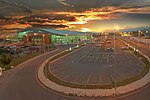
Tetrikhevi HPP powerhouse. 01

Tetrikhevi Hydroelectric Power Station (Georgian: თეთრიხევის ჰესი) is a hydroelectric power station in Georgia, the third and final stage of the Samgori cascade, located on the Upper Samgori Main Canal on the eastern outskirts of Tbilisi in the settlement of Tetrikhevhesi. It is a key element of the Samgori irrigation and energy system, created in the post-war years to irrigate arid lands and generate electricity. The station is also notable for its status as an active training and laboratory base for power engineering students from the Georgian Technical University. Construction of the station was carried out as part of the "people's construction" of the Samgori system starting in 1947; the Tetrikhevi HPP was put into permanent operation in 1955. In 1995, the station was privatized by its workforce, which enabled its rehabilitation and a significant increase in electricity generation. The current owner is Georgian Water and Power. By design, it is a diversionary, canal-type HPP. The installed capacity of the station is 13.6 MW. The powerhouse contains two hydro-units with Francis turbines, operating at a design head of approximately 110 meters. A distinctive feature of the Tetrikhevi HPP's operation, like the entire cascade, is its seasonal regime: during the winter, the station generates peak electricity by transferring water from the Sioni Reservoir to the Tbilisi Reservoir, while in the summer, the stored water is used for irrigation.

Excerpt from the Wikipedia article Tetrikhevi HPP (License: CC BY-SA 3.0, Authors, Images).

Tetrikhevi HPP
Tengiz Chantladze Street, Tbilisi Tetrikhevhesi Settlement

Geographical coordinates (GPS) Address Nearby Places
placeShow on map

Wikipedia: Tetrikhevi HPPContinue reading on Wikipedia

Geographical coordinates (GPS)

Latitude Longitude
N 41.7049 ° E 44.9328 °
placeShow on map

Address

Tengiz Chantladze Street 46
0190 Tbilisi, Tetrikhevhesi Settlement
Georgia
mapOpen on Google Maps

Tetrikhevi HPP powerhouse. 01
Share experience

Nearby Places

Tetrikhevhesi

Tetrikhevhesi (Georgian: თეთრიხევჰესი, pronounced [tʰɛtʰɾixɛvhɛsi]) is the common name for the Tetrikhevi Hydroelectric Power Plant Settlement (Georgian: თეთრიხევის ჰესის დასახლება, pronounced [tʰɛtʰɾixɛvis hɛsis dasaxlɛba] ), a settlement (dasakhleba) and suburb in the Samgori District of Tbilisi, Georgia. Located in the eastern part of the city, it lies north of the Orkhevi settlement and west of the Tetrikhevi settlement, on the Samgori Plain. It was founded in the early 1950s as a workers' settlement for the builders and staff of the eponymous hydroelectric power plant, a part of the Samgori irrigation system cascade. The history and daily life of the settlement are inextricably linked to the operation of this HPP, which has shaped its unique character over the decades. The settlement's name, a portmanteau toponym, is derived from the hydronym Tetri-Khevi (Georgian for "White Ravine") and the acronym "HPP". Historical sources emphasize the need to distinguish it from the neighboring settlement of Tetrikhevi, with which it was often confused, leading to domestic mix-ups recorded in the press. During the Soviet period, Tetrikhevhesi was built by the Gruzgidrostroy trust on previously undeveloped land and quickly became a well-maintained "green oasis." With the dissolution of the Soviet Union, the settlement underwent economic transformations, highlighted by the privatization of its core enterprise, the HPP. In the post-Soviet era, residents faced both the typical hardships of the period and new challenges, including environmental risks associated with its proximity to a mudflow-prone ravine. Today, Tetrikhevhesi remains a residential area whose infrastructure is closely tied to the power plant that gave it life.

Orkhevi (settlement in Tbilisi)

Orkhevi (Georgian: ორხევი, pronounced [ɔrxɛvi] ; formally Orkhevi Settlement, Georgian: ორხევის დასახლება, pronounced [ɔrxɛvis dasaxlɛba] ) is a settlement (dasakhleba) and suburb in the eastern part of Tbilisi, within the Samgori District. It stands on the left bank of the Mtkvari River, between the settlements of Samgori-II and Zemo (Upper) Alekseevka. The well-planned workers' settlement was established in the mid-20th century to house the builders and engineers of the Samgorvodstroy trust, responsible for constructing the Tbilisi Reservoir and the Samgori irrigation system. Over time, it has transformed from a Soviet-era industrial hub into a residential area with mixed-use development. The area of the settlement was inhabited as far back as the Late Bronze Age (13th–11th centuries BCE), as evidenced by numerous archaeological findings. The modern history of Orkhevi began in 1948 with the establishment of a key industrial and logistical base for the Samgorvodstroy trust. The settlement was rapidly developed with residential buildings and its own social infrastructure. From the 1960s to the 1980s, Orkhevi's industrial profile expanded significantly with the construction of large enterprises, including a strategically important reinforced concrete plant for the Tbilisi Metro and a branch of a building materials factory, among other industries. Archival sources from this period provide a detailed look into the life of the settlement, documenting both official achievements and the daily challenges faced by its residents. The dissolution of the Soviet Union marked a new chapter in Orkhevi's history, characterized by the privatization of Soviet enterprises, a rise in crime—notably the widely publicized case of the "Orkhevi maniac"—and a simultaneous spiritual revival, symbolized by the construction of the Church of St. Nino. In the 21st century, the settlement has faced modern challenges, including social protests, environmental issues, and conflicts over illegal construction. At the same time, a period of active urban improvement has begun, with road renovations, rehabilitation of social facilities, and the creation of new recreational areas.