place

Shag Bay

Bays of Tasmania
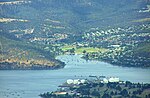
1912 Russell Family Bone Mill Shag Bay Tasmania panoramio

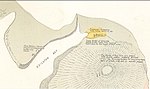
Shag Bay is an inlet on the River Derwent near Geilston Bay, Tasmania, and is within the East Risdon State Reserve . The area around Shag Bay contains a number of Aboriginal Tasmanian shell middens. A bone meal fertiliser factory was established in Shag Bay in the early 1900s. In January 1915, its boiler exploded, resulting in two deaths of two people associated with the factory. The brigantine built in 1814 HMS Nelson was towed to Shag Bay in 1920 to be broken up after it finished its use as a coal hulk.

Excerpt from the Wikipedia article Shag Bay (License: CC BY-SA 3.0, Authors, Images).

Shag Bay
Shag Bay Heritage Trail, Hobart Risdon

Geographical coordinates (GPS) Address Nearby Places
placeShow on map

Wikipedia: Shag BayContinue reading on Wikipedia

Geographical coordinates (GPS)

Latitude Longitude
N -42.835 ° E 147.333 °
placeShow on map

Address

Shag Bay Heritage Trail

Shag Bay Heritage Trail
7015 Hobart, Risdon
Tasmania, Australia
mapOpen on Google Maps

1912 Russell Family Bone Mill Shag Bay Tasmania panoramio
Share experience

Nearby Places

Risdon Cove
Risdon Cove

Risdon Cove is a cove located on the east bank of the Derwent River, approximately 7 kilometres (4 mi) north of Hobart, Tasmania. It was the site of the first British settlement in Van Diemen's Land, now Tasmania, the island state of Australia. The cove was named by John Hayes, who mapped the river in the ship Duke of Clarence in 1794, after his second officer William Bellamy Risdon. In 1803 Lieutenant John Bowen was sent to establish a settlement in Van Diemen's Land. On the advice of the explorer George Bass he had chosen Risdon Cove. While the site was a good one from a defensive point of view, the soil was poor and water scarce. Lady Nelson anchored at Risdon on the eastern shore of the Derwent River on Wednesday 8 September 1803, five days before the whaler Albion arrived with Lt. Bowen on board. The 49 people aboard the Lady Nelson and Albion made a curious party of soldiers, sailors, settlers and convicts. In 1804 Lieutenant Colonel David Collins arrived in the Derwent from Port Phillip on Ocean. Within a few days he rejected Risdon Cove as a suitable settlement site, for its inadequate source of fresh water, and moved his party across the river to Sullivans Cove. The military and convicts disembarked from Ocean near Hunter Island on 20–21 February 1804 and thus beginning what is now Hobart. Lady Nelson landed the free settlers at New Town Bay on 22 February. One of the first land grants at Risdon Cove was made to Dr William F A I'Anson, the chief surgeon who arrived with Lieutenant-Governor Collins in 1804.