place

Minto Eye Hospital

1896 establishments in IndiaAll pages needing cleanupEye hospitals in IndiaHospitals established in 1896Hospitals in Bangalore
Teaching hospitals in IndiaUse Indian English from June 2018Wikipedia pages needing cleanup from November 2010
Minto Eye Hospital
Minto Eye Hospital

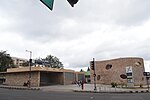
Minto Ophthalmic Hospital is a government run specialty hospital in Bangalore treating diseases of the eye. Minto Ophthalmic Hospital, (a.k.a. Regional Institute of Ophthalmology, Minto Ophthalmic Hospital), was established in 1896, making it one of the oldest speciality eye hospitals in the world. The Hospital was started in Chikkapete area in 1896, moved to Lalbagh lodge in 1897 and later shifted to the present building in 1913 which was constructed during the reign of Nalwadi Krishnaraja Wadiyar IV, the King of Mysuru state. It is affiliated to the Bangalore Medical College and Research Institute, and is an institution of national importance.It is a 300 bedded, tertiary ophthalmic hospital. It includes Community Ophthalmology, Cornea & Eye Bank, Refractive Surgery, Glaucoma clinic, Squint, Oculoplasty & Neurophthalmology clinic, Low Visual Aids clinic and a Vitreo-retinal & Uvea clinic. Hundreds of ophthalmologists have been trained at this institute since its inception. A tertiary referral centre, Minto Ophthalmic Hospital offers its services at subsidized rates to the poor and needy of Karnataka and its neighbouring states.

Excerpt from the Wikipedia article Minto Eye Hospital (License: CC BY-SA 3.0, Authors, Images).

Minto Eye Hospital
Albert Victor Road, Bengaluru K R Market Ward (West Zone)

Geographical coordinates (GPS) Address Nearby Places
placeShow on map

Wikipedia: Minto Eye HospitalContinue reading on Wikipedia

Geographical coordinates (GPS)

Latitude Longitude
N 12.961925 ° E 77.5719 °
placeShow on map

Address

Bangalore Medical College Hospitals

Albert Victor Road
572161 Bengaluru, K R Market Ward (West Zone)
Karnataka, India
mapOpen on Google Maps

Minto Eye Hospital
Minto Eye Hospital
Share experience

Nearby Places

Tipu Sultan's Summer Palace

Tipu Sultan's Summer Palace, in Bangalore, India, is an example of Indo-Islamic architecture and was the summer residence of the Mysorean ruler Tipu Sultan. Hyder Ali commenced its construction within the walls of the Bangalore Fort, and it was completed during the reign of Tipu Sultan in 1791. After Tipu Sultan's death in the Fourth Anglo-Mysore War, the British Administration used the palace for its secretariat before moving to Attara Kacheri in 1868. Today the Archaeological Survey of India maintains the palace, which is located at the center of Old Bangalore near the Kalasipalyam bus stand, as a tourist spot. Entry fee is ₹20 for Indian citizens, while for foreign visitors is ₹200 (US$2.60). The structure was built entirely teak and stands adorned with pillars, arches and balconies. It is believed that Tipu Sultan used to conduct his durbar (court) from the eastern and western balconies of the upper floor. There are four smaller rooms in the corners of first floor which were Zenana Quarters. There are beautiful floral motifs embellishing the walls of the palace. The site also holds a painting of grand throne visualized by Tipu Sultan himself. Coated with gold sheets and stuck with precious emerald stones, Tipu had vowed never to use it until he completely defeated the British Army. After Tipu Sultan's death, the British dismantled the throne and auctioned its parts as it was too expensive for a single person to buy whole.The rooms in the ground floor have been converted into a small museum showcasing various achievements of Tipu Sultan and his administration. There are newly done portraits of the people and places of that time. There is a replica of Tipu's Tiger, which is in the Victoria and Albert Museum in London. Tipu Sultan's clothes and his crown are present in silver and gold pedestals. The silver vessels given by a general to Hyder Ali is also displayed. The Horticulture Department, Government of Karnataka, maintains the area in front of the palace as a garden and lawn

Bengaluru Pete
Bengaluru Pete

Bengaluru Pete is the area of Bangalore city which was established by Kempegowda I (c. 1510–1570) in 1537 with roads laid out in the cardinal directions, and entrance gates at the end of each road. Kempegowda also termed the Pete he built as his "gandu bhoomi" or "Land of Heroes". Pete (Kannada: Market centre) forms a well–defined body of markets which were associated with various trades and professions of the populace in the locality markets and given the names of trades pursued in such markets. The well known markets are the Tharagupete–market for grains, the Balepete – for Bangles and musical instruments, the Chikkapete and the Nagarthpete for textile trade, the Ballapurpete and the Ganigarapete market where oil is extracted by people of the Ganiga community, the Tigalarapete–flower market of gardeners, the Cubbonpete – textile manufacture by people of the Devanga community.The Bengaluru Pete, established in 1537 around the Mud Fort, built by Kempe Gowda I as the nucleus, with an area of 2.24 square kilometres (1 sq mi), has expanded to the present sprawling city of 741 square kilometres (286 sq mi) embracing a multi ethnic population of 5.7 million; as per Census of India 2001, the present population is reported as 6.6 million (2007) and is thus known by the epithet "the Boom city". The other nicknames of the city also reflect the growth direction of the city, such as the Silicon Valley of India, the "Fashion Capital of India," and "The Pub City of India."The old Pete, structured in the contemporary style of deep networks of crowded streets, richly represented the multi cultural identity, social history, and economic geography of the times which are considered as a hallmark in the planning and design of any urban agglomerate. The place has left its mark on literature with novels like Riddle of the Seventh Stone being set in this part of Bangalore. These attributes have been further accentuated in the present day Bangalore city. It is now the third largest metropolis in India, the largest city in Karnataka state and the 28th largest city in the world.