place

Cheraman Juma Mosque

7th-century mosquesGrand mosquesHistory of Islam in IndiaHistory of Thrissur districtMiracles attributed to Muhammad
Mosques in KeralaReligious buildings and structures in Thrissur districtTourist attractions in Thrissur districtUse Indian English from August 2019Wikipedia references cleanup from June 2019
Cheraman Juma Masjid

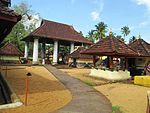
The Cheramaan Perumal Juma Mosque (Malayalam: ചേരമാൻ ജുമാ മസ്ജിദ്‌) (Arabic: مسجد الرئيس جمعة) is a mosque in Methala, Kodungallur, Thrissur in the Indian state of Kerala. A legend claims that it was built in 629 CE, which makes it the oldest convert mosque in the Indian subcontinent which is still in use. It was built on the orders of the successor of Cheraman Perumal, the Chera King of modern-day Kerala. The mosque was constructed in Kerala style with hanging lamps, making the historicity of its date claims more convincing.The mosque was destroyed by the Portuguese in 1504 when Lopo Soares de Albergaria attacked the port of Kodungallur. The old building was built some time after the 1504 de Algabaria attack (i.e., from mid-16th to the early 17th century). Modern corridors and halls were built in 1984. The 1984 extensions, which surround the old building, conceal almost all of the exterior features of the old building.

Excerpt from the Wikipedia article Cheraman Juma Mosque (License: CC BY-SA 3.0, Authors, Images).

Geographical coordinates (GPS)

Latitude Longitude
N 10.22 ° E 76.194 °
placeShow on map

Address


680666 , Thiruvanchikulam
Kerala, India
mapOpen on Google Maps

Cheraman Juma Masjid
Share experience

Nearby Places

Kodungallur
Kodungallur

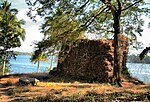
Kodungallur (IPA: [koɖuŋːɐlːuːr]; also Cranganore, Portuguese: Cranganor; formerly known as Mahodayapuram, Shingly, Vanchi, Muchiri, Muyirikkode, and Muziris) is a historically significant town situated on the banks of river Periyar on the Malabar Coast in Thrissur district of Kerala, India. It is 29 kilometres (18 mi) north of Kochi (Cochin) by National Highway 66 and 38 km (24 mi) from Thrissur. Kodungallur, being a port city at the northern end of the Kerala lagoons, was a strategic entry point for the naval fleets to the extensive Kerala backwaters. As of the 2011 India Census, Kodungallur Municipality had a population of 33,935. It had an average literacy rate of 95.10%. Around 64% of the population follows Hinduism, 32% Islam and 4% Christianity. Schedule Caste (SC) constitutes 7.8% while Schedule Tribe (ST) were 0.1% of total population in Kodungallur.Kodungallur is the headquarters of the Kodungallur sub-district (tehsil) in Thrissur district. Kodungallur Kerala Legislative Assembly constituency is a part of Chalakudi Lok Sabha Constituency. Kodungallur is well connected to other towns in Kerala through the road network. Aluva Railway Station in Ernakulam district (28 km [17 mi]) is the major railway station near Kodungallur. Fort Cranganore (Fortaleza São Tomé), known locally as Kottappuram Fort/Tipu's Fort, was constructed in Kodungallur by Portuguese in 1523. The fort was enlarged in 1565, and passed into the hands of the Dutch in 1663. Thiruvanchikulam Mahadeva Temple, dedicated to the god Siva, is one of the major Siva temples in South India. Siva in the Thiruvanchikulam temple was the patron deity of the Chera Perumals of Kerala and remains the family deity of the Cochin Royal Family. The first case of COVID-19 in India was reported at Kodungallur in a medical student who returned from Wuhan University.