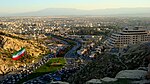
Shiraz (Persian: شیراز; ; [ʃiːˈɾɒːz] ) is the fifth-most-populous city of Iran and the capital of Fars Province, which has been historically known as Pars (پارس, Pārs) and Persis. As of the 2016 national census, the population of the city was 1,565,572 people, and its built-up area with Sadra was home to almost 1,800,000 inhabitants. A census in 2021 showed an increase in the city's population to 1,995,500 people. Shiraz is located in southwestern Iran on the rudkhaneye khoshk (lit. 'dry river') seasonal river. Founded in the early Islamic period, the city has a moderate climate and has been a regional trade center for over a thousand years.
The earliest reference to the city, as Tiraziš, is on Elamite clay tablets dated to 2000 BCE. The modern city was founded by the Sasanian dynasty and restored by the Umayyad Caliphate in 693 CE and grew prominent under the successive Iranian Saffarid and Buyid dynasties in the 9th and 10th–11th centuries, respectively. In the 13th century, Shiraz became a leading center of the arts and letters, due to the encouragement of its ruler and the presence of many Persian scholars and artists. Two famous poets of Iran, Hafez and Saadi, are from Shiraz, whose tombs are located on the north side of the current city boundaries.
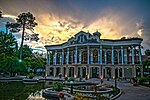
Shiraz is one of the top tourist cities in Iran and is known as the city of poets, literature, and flowers. It is also considered by many Iranians to be the city of gardens due to the presence of many gardens and fruit trees that can be seen throughout the city, such as Eram Garden. Shiraz is also a famous tourist destination in the world. Every year many tourists come from around the world to visit the city. Shiraz has historically had major Jewish and Christian communities. The crafts of Shiraz consist of inlaid mosaic work of triangular design; silverware; pile carpet-weaving and weaving of kilim, called gilim and jajim in the villages and among the tribes. Dominant industries in the city include the production of cement, sugar, fertilizers, textile products, wood products, metalwork, and rugs. Shiraz also has a major oil refinery and is a major centre for Iran's electronic industries: 53 percent of Iran's electronic investment has been centred in Shiraz. The city is home to Iran's first solar powerplant. Recently, Shiraz's first wind turbine has been installed above Mount Babakuhi near the city.

 Continue reading on Wikipedia