place

Immaculate Conception Cathedral, Thessaloniki

20th-century Roman Catholic church buildings in GreeceChurches in ThessalonikiItalianate architecture in GreeceRoman Catholic cathedrals in GreeceRoman Catholic churches completed in 1902
Catholic church of the Immaculate Conception, Thessaloniki

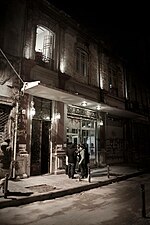
The Immaculate Conception Cathedral (Greek: Καθεδρικός Ναός της Αμιάντου Συλλήψεως της Θεοτόκου) is a Roman Catholic church located on Frangon street in the city of Thessaloniki, in northern Greece. The church follows the Roman or Latin rite and functions as the seat of the Apostolic Vicariate of Thessaloniki (Vicariatus Apostolicus Thessalonicensis or Αποστολικό Βικαριάτο Θεσσαλονίκης).

Excerpt from the Wikipedia article Immaculate Conception Cathedral, Thessaloniki (License: CC BY-SA 3.0, Authors, Images).

Immaculate Conception Cathedral, Thessaloniki
Φράγκων, Thessaloniki Municipal Unit Aristotelous (1st District of Thessaloniki)

Geographical coordinates (GPS) Address Phone number Nearby Places
placeShow on map

Wikipedia: Immaculate Conception Cathedral, ThessalonikiContinue reading on Wikipedia

Geographical coordinates (GPS)

Latitude Longitude
N 40.6372 ° E 22.9383 °
placeShow on map

Address

Α. Ποντίκης - Λογιστής

Φράγκων 19
546 25 Thessaloniki Municipal Unit, Aristotelous (1st District of Thessaloniki)
Macedonia and Thrace, Greece
mapOpen on Google Maps

Phone number

call2310539845

Catholic church of the Immaculate Conception, Thessaloniki
Share experience

Nearby Places

Venizelou station

Venizelou (Greek: Βενιζέλου, literally Venizelos [Street]) is an under-construction metro station serving Thessaloniki Metro's Line 1 and Line 2. The station is named after Eleftherios Venizelos, Liberal Prime Minister of Greece. It is expected to enter service in 2023. Construction of this station has been held back by major archaeological finds, and it is designated as a high-importance archaeological site by Attiko Metro, the company overseeing its construction. At this station, Roman Thessaloniki's marble-clad and column-lined Decumanus Maximus (main east-west avenue), along with shops and houses, was found running along the route of the Via Egnatia (modern Egnatia Street) at 5.4 metres (18 ft) below ground level.The discovery was so major that it delayed the entire Metro project for years. A historian dubbed the discovery "the Byzantine Pompeii". Attiko Metro wanted to disassemble the road and re-assemble it elsewhere, while the City Council wanted Attiko Metro to redesign its network to accommodate the discovery in situ. Ultimately the case reached Greece's Council of State and Attiko Metro re-designed the metro line, sinking the tunnels to a depth ranging from 14 metres (46 ft) to 31 metres (102 ft), and making provisions for mini museums within the metro stations, similar to those of Athens Metro stations like Syntagma, which houses the Syntagma Metro Station Archaeological Collection.Venizelou station will also feature an open archaeological site, the first of its kind anywhere in a metro station, in order to maintain the road in its original location. At the next station, Aghia Sofia, where the same road was unearthed (and where it is arguably more important, as a public square was found as well), the road will be disassembled and reassembled elsewhere.Venizelou station also appears in the 1988 Thessaloniki Metro proposal under the name Alkazar. Alkazar is the popular name for Hamza Bey Mosque, a landmark on Egnatia and Venizelou streets.