place

Alberta Bair Theater

Art Deco architecture in MontanaArt Deco cinemas and movie theatersBillings, MontanaCinemas and movie theaters in MontanaPerforming arts in Montana
Alberta Bair Theater 2024

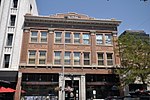
The Alberta Bair Theater is a performing arts center in Billings, Montana. It hosts performances ranging from local groups to nationally touring performers. Its address is 2801 3rd Ave North, on land that was previously the homestead of businessman Charles M. Bair, located in what is now downtown Billings. The theater was originally named the Fox Theater, but in 1987, the theater was renamed the Alberta Bair Theater in honor of his daughter Alberta in 1987, who made the largest donation to the theater's 1980s renovation. The theater has 1,394 seats. It is the only performing arts center between Spokane, Washington and Denver, Colorado that is fully equipped for presenting shows by major professional touring companies and artists. The theater is a 501(c)(3) nonprofit organization. It hosts educational programs and discount performances, and it is partially supported by volunteers.

Excerpt from the Wikipedia article Alberta Bair Theater (License: CC BY-SA 3.0, Authors, Images).

Alberta Bair Theater
3rd Avenue North, Billings

Geographical coordinates (GPS) Address Nearby Places
placeShow on map

Wikipedia: Alberta Bair TheaterContinue reading on Wikipedia

Geographical coordinates (GPS)

Latitude Longitude
N 45.7839 ° E -108.508 °
placeShow on map

Address

Alberta Bair Theater

3rd Avenue North 2801
59101 Billings
Montana, United States
mapOpen on Google Maps

Alberta Bair Theater 2024
Share experience

Nearby Places

Billings, Montana
Billings, Montana

Billings (Crow: Ammalapáshkuua, Cheyenne: É'êxováhtóva) is the largest city in the U.S. state of Montana, with a population of 117,116 as of the 2020 census. Located in the south-central portion of the state, it is the seat of Yellowstone County and the principal city of the Billings Metropolitan Area, which had a population of 184,167 in the 2020 census. It has a trade area of over 500,000.Billings was nicknamed the "Magic City" because of its rapid growth from its founding as a railroad town in March 1882. With one of the largest trade areas in the United States, Billings is the trade and distribution center for much of Montana east of the Continental Divide, Northern Wyoming, and western portions of North Dakota and South Dakota. Billings is also the largest retail destination for much of the same area. The city is experiencing rapid growth and a strong economy; it has had and is continuing to have the largest growth of any city in Montana. Parts of the metro area are seeing hyper growth. From 2000 to 2010 Lockwood, an eastern suburb, saw growth of 57.8%, the largest growth rate of any community in Montana. Billings has avoided the economic downturn that affected most of the nation from 2008 to 2012 as well as the housing bust. With more hotel accommodations than any area within a five-state region, the city hosts a variety of conventions, concerts, sporting events, and other rallies. With the Bakken oil development in eastern Montana and western North Dakota, the largest oil discovery in U.S. history, as well as the Heath shale oil discovery just north of Billings, the city's growth rate stayed high during the shale oil boom. Although the city is growing, its growth rate has diminished markedly with oil price declines in recent years.Attractions in and around Billings include ZooMontana, Yellowstone Art Museum, Pompey's Pillar, Pictograph Cave, Chief Plenty Coups State Park. Little Bighorn Battlefield National Monument, Bighorn Canyon National Recreation Area, Red Lodge Mountain Resort, the Beartooth Highway, which connects Red Lodge and Yellowstone National Park. The northeast entrance to Yellowstone National Park is a little over 100 miles from Billings.

Western Heritage Center

The Western Heritage Center is a regional museum located in historic downtown Billings, Montana, United States. The museum is housed in the historic Parmly Billings Memorial Library, built in 1901. The building is a stately Richardsonian Romanesque structure with twin towers, listed on the National Register of Historic Places. The Western Heritage Center displays original exhibits about south-central Montana and the Northern Plains and houses oral histories and artifacts about the history of the Yellowstone River Valley. The museum celebrated its fiftieth anniversary in 2021. The Western Heritage Center, a former affiliate of the Smithsonian Institution, is accredited by the American Alliance of Museums. The museum opened in 1971 after a organized group of leading citizens prevented the building from being torn down. The founders established the museum as an interpretive center with an emphasis on changing exhibits, outreach programming, and the incorporation of new technologies. In 2001, the Western Heritage Center received the Montana Governor's Humanities Award, the second organization to receive an honor usually reserved for individual contributions to the Humanities. In 2002, the WHC became the first Smithsonian Institution affiliated museum in the Northern Plains. Beginning in 2004, and running through 2009, WHC received federal appropriations from the United States Department of the Interior for the American Indian Tribal Histories Project, a program contributing to the preservation of Crow and Northern Cheyenne tribal histories. The museum is one of six museums in Montana accredited by the American Alliance of Museums. The Western Heritage Center programs include a monthly High Noon lecture and video series, a walking tour program (Hoof It with a Historian), fourteen traveling exhibits, partnerships with regional museums, schools, and businesses, and active participation in local events. The WHC displays six to seven exhibits annually, most based on original research. The Western Heritage Center publishes books, video materials, and education kits relating to regional history. The museum cares for 40,000 artifacts illustrating and documenting Yellowstone River Valley history. The museum is open to the public between early March and late December, Tuesday-Saturday, 10-5. The museum receives annual funding and support from Yellowstone County.