place

Tajrish

Neighbourhoods in TehranPages with Persian IPAShemiranat County
Tajrish square
Tajrish square

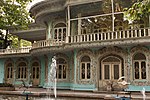
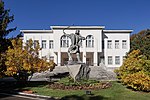
Tajrish (Persian: تجريش, pronounced [tædʒˈɾiːʃ], also romanized as Tajrīš) is a neighbourhood of Tehran, capital of Iran. Administratively it is in Shemiranat County, Tehran Province. It used to be a village and later was absorbed into the city of Tehran. The Tajrish neighbourhood is located along the northern edge of Tehran. This neighbourhood is one of the oldest parts of Tehran and during the last few decades, has become popular with the wealthy by virtue of the low levels of pollution, in turn created by the area's favorable location along Tehran's northern hills. Tajrish is situated in the Shemiranat County. As of 2006, the neighborhood had 86,000 inhabitants. The Tajrish Square itself is known as Sar-e Pol-e Tajrish (Persian: سر پل تجریش, lit. 'at the Tajrish Bridge'). This square is actually a vast bridge on top of a qanat river. In older times the locals used to call this bridge Gowgal, meaning "[The Bridge] of the Cow Herd.

Excerpt from the Wikipedia article Tajrish (License: CC BY-SA 3.0, Authors, Images).

Tajrish
سالور, Tehran District 1

Geographical coordinates (GPS) Address Nearby Places
placeShow on map

Wikipedia: TajrishContinue reading on Wikipedia

Geographical coordinates (GPS)

Latitude Longitude
N 35.804444444444 ° E 51.425555555556 °
placeShow on map

Address

سالور

سالور
19886-15753 Tehran, District 1
Iran
mapOpen on Google Maps

Tajrish square
Tajrish square
Share experience

Nearby Places

Zafaraniyeh

Zafaraniyeh (main street: Shahid Sarlashkar Fallahi) is an affluent neighbourhood in the north of Tehran, Iran. The name's origin lies in the fact that it was the residence of many saffron traders long ago, thus the name Zafaraniyeh (the Persian version of Saffronia). The Islamic Azad University of Tehran, Languages branch is located at the beginning of Zafaraniyeh that teaches English, German, French, Spanish, and other foreign languages. The museum of Sa'dabad Palace is situated at the end of this street, which also contains a culture house. There are plans to build a shopping center in Asef crossroad. The Moghaddas Ardebili Street connects Zafaraniyeh to Velenjak from east and to Valiasr Street and Elahieh from west. Zafaraniyeh is one of Tehran's safest and most heavily guarded neighborhood has due to the many Embassies, residences, head of state, nobles and notables who reside here. There is also a synagogue here. Zaferanieh area has one of, if not the highest household income rates in Tehran. With many wealthy Iranians and non-Iranians residing here, it is regarded as the best and most pricey area of TehranAfter Lavasan and Sahibqraniyeh, Zafaranieh is actually the most expensive property in the capital, but the presence of streets like Sepand in Aqdasiyeh or Farishte in Elahiyeh has caused Zafaranieh to occupy a lower rank. The area has many Billionaires and Millionaires and many of the residents also live abroad. The area consists of nearly all apartment blocks with only a few houses. It is near the longest city road in Asia, Valiasr Street. The Tehran Time museum is located in this neighborhood.

Elahieh

Elahiyeh, an opulent neighborhood in Tehran, stands as a symbol of affluence in Iran. Not only does it host the nation's most valuable properties, but it's also a thriving hub for residential and commercial activities. This coveted area is the residence of choice for numerous politicians, diplomats, expatriates, artists, and the original founders who have shaped Elahiyeh into the prestigious enclave it is today. At its heart, Elahiyeh boasts Tehran's priciest real estate, where property values soar to an astonishing $2000 per square foot, drawing parallels with the opulence of Beverly Hills, California. Furthermore, Elahiyeh is privileged to accommodate the embassy clubhouses of several nations, including Russia, Turkey, Germany, Denmark, Switzerland, Belgium, Iceland, Cuba, and Finland. Regarded as the crowning jewel of Tehran's real estate landscape, Elahiyeh is home to some of the capital's most lavish streets. Notably, Fereshteh Street, the most renowned thoroughfare in the district, was once renowned for its tranquility and lush greenery. However, it underwent a significant transformation after the Islamic revolution, particularly during the construction boom of the 1990s, when Gholamhossein Karbaschi and Ghalibaaf held the mayoral reins in Tehran. In this period, vast gardens and grand estates gave way to upscale high-rises, leading to a substantial increase in the neighborhood's population. While this evolution has elevated Elahiyeh to unprecedented levels of luxury, it has also presented challenges in the form of congested narrow alleys, particularly during summer nights when traffic grinds to a standstill. Despite these minor setbacks, Elahiyeh remains an epitome of elegance, securing its place as the most expensive locale in Tehran and the entire country.