place

Grótta

Landforms of IcelandLighthouses in IcelandProtected areas of IcelandTied islands
Grótta2
Grótta2

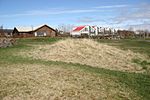
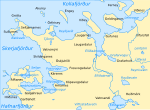
Grótta (pronounced [ˈkrouhta]) is a tied island at the extreme end of Seltjarnarnes in the Capital Region of Iceland. During high tide the tombolo is completely submerged, turning Grótta into an island.The island is accessible by foot during low tide, giving people a window of about six hours to visit the island. Grótta and the region close by is a popular outdoor recreational area.Grótta became a nature reserve in 1974 and it is forbidden to visit it during nesting season, from 1 May to 15 July. There are about 450 couples of arctic terns in Grótta.A lighthouse was originally built in 1897, a new one was built in 1947. The local search and rescue association is named after long term lighthouse keeper Albert Þorvarðarson (1910–1973).The main house has been deserted since 1970. The municipality acquired the buildings in 1994 and they are now used as occasional facilities for groups on school trips.

Excerpt from the Wikipedia article Grótta (License: CC BY-SA 3.0, Authors, Images).

Grótta
Norðurströnd,

Geographical coordinates (GPS) Address Nearby Places
placeShow on map

Wikipedia: GróttaContinue reading on Wikipedia

Geographical coordinates (GPS)

Latitude Longitude
N 64.1644 ° E -22.022 °
placeShow on map

Address

Grótta

Norðurströnd
170
Iceland
mapOpen on Google Maps

Grótta2
Grótta2
Share experience

Nearby Places

Vesturbæjarlaug
Vesturbæjarlaug

Vesturbæjarlaug, also known as Sundlaug Vesturbæjar, is a swimming pool in the Vesturbær district in Reykjavík, the capital of Iceland. It has a 12.5×25 m main swimming pool with depth ranging from 0.9 to 3.9 m. There is also an adjacent playpool, several hot tubs, a cold tub, outdoor showers and a sauna. The pool was opened on November 25 1961. It had two "firsts" for Icelandic swimming pools: the large playpool for children, and the spiral-shaped hot tubs, with dimensions based on the pool of Snorri Sturluson in Reykholt. These design elements were reused on a larger scale by architect Einar Sveinsson for the much larger Laugardalslaug, which opened in 1968, and the design of the hot tubs was widely copied by other Icelandic swimming pools over the next years. The pool house was designed by architect Bárður Ísleifsson, but the hot tub and outdoor area was designed by Gísli Halldórsson. The pool reception area was initially decorated with wall paintings by British-Icelandic artist Barbara Árnason, who drew inspiration from the saga Harðar saga ok Hólmverja, where Helga Haraldsdóttir saved her two sons by swimming across Hvalfjörður. Most of these decorations were removed in 1995, but a small part remains on the ceiling. Vesturbæjarlaug was the first swimming pool in Iceland that was designed for leisure, and not just swimming. Since it opened it has been a popular hub for the neighborhood where people meet and chat.