place

Manitoba Court of Appeal

1906 establishments in ManitobaCanadian appellate courtsCourts and tribunals established in 1906Manitoba courts

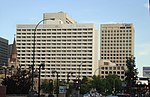
The Manitoba Court of Appeal (French: Cour d'appel du Manitoba) is the court of appeal in, and the highest court of, the Canadian province of Manitoba. It hears criminal, civil, and family law cases, as well as appeals from various administrative boards and tribunals.Seated in Winnipeg, the Court is headed by the Chief Justice of Manitoba, and is composed of a total of 13 justices. At any given time, there may be one or more additional justices who sit as supernumerary justices.The Court hears appeals from the Provincial Court and the Manitoba Court of King's Bench, as well as certain administrative tribunals, including the Residential Tenancies Commission, the Municipal Board, and the Manitoba Labour Board, among others.Most cases are heard by a panel of three justices. A single justice presides over matters heard in "chambers", usually interlocutory matters or applications for leave to appeal. Proceedings before the court are governed by the Court of Appeal Rules.

Excerpt from the Wikipedia article Manitoba Court of Appeal (License: CC BY-SA 3.0, Authors).

Manitoba Court of Appeal
York Avenue, Winnipeg Fort Rouge–East Fort Garry

Geographical coordinates (GPS) Address Nearby Places
placeShow on map

Wikipedia: Manitoba Court of AppealContinue reading on Wikipedia

Geographical coordinates (GPS)

Latitude Longitude
N 49.887853 ° E -97.146821 °
placeShow on map

Address

York Avenue

York Avenue
R3C 3J3 Winnipeg, Fort Rouge–East Fort Garry
Manitoba, Canada
mapOpen on Google Maps

Share experience

Nearby Places

Winnipeg
Winnipeg

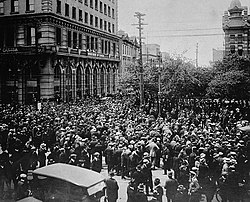
Winnipeg ( ) is the capital and largest city of the Canadian province of Manitoba. It is centred on the confluence of the Red and Assiniboine rivers, near the longitudinal centre of North America. As of 2021, Winnipeg had a city population of 749,607 and a metropolitan population of 834,678, making it Canada's sixth-largest city and eighth-largest metropolitan area. The city is named after the nearby Lake Winnipeg; the name comes from the Western Cree words for 'muddy water' – winipīhk. The region was a trading centre for Indigenous peoples long before the arrival of Europeans; it is the traditional territory of the Anishinaabe (Ojibway), Ininew (Cree), Oji-Cree, Dene, and Dakota, and is the birthplace of the Métis Nation. French traders built the first fort, Fort Rouge, on the site in 1738. A settlement was later founded by the Selkirk settlers of the Red River Colony in 1812, the nucleus of which was incorporated as the City of Winnipeg in 1873. Being far inland, the city's climate is extremely seasonal (continental) even by Canadian standards, with average January highs of around −11 °C (12 °F) and average July highs of 26 °C (79 °F). Known as the "Gateway to the West", Winnipeg is a railway and transportation hub with a diversified economy. This multicultural city hosts numerous annual festivals, including the Festival du Voyageur, the Winnipeg Folk Festival, the Jazz Winnipeg Festival, the Winnipeg Fringe Theatre Festival, and Folklorama. Winnipeg was the first Canadian host of the Pan American Games in 1967. It is home to several professional sports franchises, including the Winnipeg Blue Bombers (Canadian football), Winnipeg Jets (ice hockey), Manitoba Moose (ice hockey), Valour FC (soccer), Winnipeg Sea Bears (basketball), and the Winnipeg Goldeyes (baseball).

Winnipeg Art Gallery

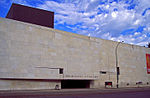
The Winnipeg Art Gallery (WAG) is an art museum in Winnipeg, Manitoba, Canada. Its permanent collection includes over 24,000 works from Canadian, Indigenous Canadian, and international artists. The museum also holds the world's largest collection of Inuit art. In addition to exhibits for its collection, the museum has organized and hosted a number of travelling arts exhibitions. Its building complex consists of a main building that includes 11,000 square metres (120,000 sq ft) of indoor space and the adjacent 3,700-square-metre (40,000 sq ft) Qaumajuq building. The present institution was formally incorporated in 1963, although it traces its origins to the Winnipeg Museum of Fine Arts, an art museum opened to the public in 1912 by the Winnipeg Development and Industrial Bureau. The bureau opened the Winnipeg School of Arts in the following year, and operated the art museum and art school until 1923, when the two entities were incorporated as the Winnipeg Gallery and School of Arts. In 1926, the Winnipeg Art Gallery Association was formed to assist the institution in operating its museum component. The Winnipeg Gallery and School of Art was dissolved in 1950, although its collection was loaned indefinitely to the Winnipeg Art Gallery Association, who continued to exhibit it. In 1963, the Winnipeg Art Gallery Association was formally incorporated as the Winnipeg Art Gallery by the Legislative Assembly of Manitoba. The museum moved to its present location in September 1971, with the opening of a purpose-built building designed by Gustavo da Roza. In 2021, the museum opened a Michael Maltzan-designed Qaumajuq building in order to house the museum's Inuit art collection.