place

Latvian Museum of Pharmacy

1987 establishments in LatviaEuropean museum stubsLatvian building and structure stubsMedical and health organisations based in LatviaMuseums established in 1987
Museums in RigaPharmacy museums
Museum of Pharmacy in Riga

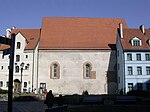
The Latvian Museum of Pharmacy is a medical museum in Riga, Latvia. It was founded in 1987 in association with the Pauls Stradins Museum for History of Medicine and is located on Richard Wagner street in an18th century building which itself is an architectural monument. The museum is dedicated to understanding the development of pharmacy and pharmacies in Latvia and contains documents and books from the 17th- 19th century, pharmacist tools and devices for preparing drugs, and drugs which were manufactured in Latvia in the 1920s and 1930s

Excerpt from the Wikipedia article Latvian Museum of Pharmacy (License: CC BY-SA 3.0, Authors, Images).

Latvian Museum of Pharmacy
Riharda Vāgnera iela, Riga Old Riga

Geographical coordinates (GPS) Address Nearby Places
placeShow on map

Wikipedia: Latvian Museum of PharmacyContinue reading on Wikipedia

Geographical coordinates (GPS)

Latitude Longitude
N 56.948333333333 ° E 24.111388888889 °
placeShow on map

Address

Riharda Vāgnera iela 13
LV-1050 Riga, Old Riga
Vidzeme, Latvia
mapOpen on Google Maps

Museum of Pharmacy in Riga
Share experience

Nearby Places

Riga Russian Theatre

The Mikhail Chekhov Riga Russian Theatre (Latvian: Mihaila Čehova Rīgas Krievu teātris, Russian: Рижский русский театр имени Михаила Чехова), colloquially referred to as the Russian Theatre (Latvian: Krievu teātris, Russian: Русский театр) or the RRT, is a Russian-language theatre in Riga, Latvia. It is located on 16 Kaļķu iela, Riga. The Mikhail Chekhov Riga Russian Theatre (known before 2006 as Riga Russian Drama Theatre) was founded in 1883, making it the oldest Russian-language drama theatre outside Russia. The original troupe consisted of sixteen actors. The theatre grew during the 19th century and had something of a golden age during the leadership of K.N. Nezlobin, prior to the Russian Revolution. The theatre continued to operate after Latvia became an independent country following the Latvian War of Independence (1918–20). During the subsequent Soviet occupation of Latvia, the theatre continued to operate, but had to adapt to the political censorship of the day. It did not put on any performances during World War II. Following the dissolution of the Soviet Union and the re-establishment of Latvian independence, the theatre can once more offer a mix of classical plays and new, innovative plays. In 2006, it was named after Michael Chekhov, who spent two years in Riga (1932-1934) and influenced the Latvian theatre and performing arts. Since the 8 January 2018, the theatre has been led by Dana Bjorka, general manager and member of the board.

1998 Riga bombing

The 1998 Riga bombings were a series of bombings that took place in Riga, Latvia and which received considerable coverage at the time, most notably for their connection with fascist groups and the perception of an increase of fascism in Latvia. The United States government offered to help to locate the suspects, calling the acts "cowardly," and then-Latvian Prime Minister Guntars Krasts condemned the bombings, calling them an attempt to destabilize the country.At 1:50 am on April 2 a bomb exploded in Riga's old town outside the 92-year-old Peitav Synagogue, the only surviving working synagogue in the city, causing severe damage to the building and surrounding area. The bomb, which was supposedly planted by fascist extremists, was reportedly placed on the front steps of the synagogue building. The bomb caused extensive damage, including tearing out the 90 kg oak door, destroying all the windows and casings of the basement and first and second floors, and leaving deep gouges in the wall. There were no casualties. Four days after the April 2 bombing, another explosion caused damage to the Russian Embassy in Riga. As with the April 2 explosion, there were no injuries. The cause of the blast was plastic explosives detonated in a trash bin. The attack was linked with a rise in nationalist and extremist actions that seriously unsettled relations among Latvians, Jews and Russians. Alexander Udaltsev, Russia's ambassador to Latvia, joined Latvian leaders in blaming the incident on those trying to drive a wedge between Russians and Latvians. The Russian Foreign Ministry controversially blamed the bombing outside its Riga embassy on "anti-Russian hysteria recently produced in Latvia and the encouragement of nationalism and extremism" and called for drastic measures to punish those who were guilty. A few days after the Riga bombings, a monument to Latvian victims of the Holocaust was defaced in the port town of Liepāja.