place

Military Hospital Rawalpindi

1857 establishments in British IndiaHospitals established in 1857Hospitals in RawalpindiMilitary medical facilities in PakistanRawalpindi District

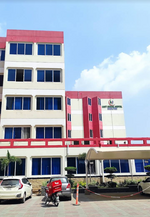
The Pak Emirates Military Hospital Rawalpindi is the largest hospital of the Pakistan Armed Forces, being one of the hospitals in the Pakistan Army with an ISO certification, located in the city of Rawalpindi. Before independence in 1947 it was called the British Indian Military Hospital Rawalpindi.Its commandant/CEO is a serving Major General of Army Medical Corps. It has one deputy commandant with the rank of brigadier and two assistant commandants (administrators) with the rank of Colonel. Its family wing is looked after by a Lady Medical Officer with the rank of brigadier. It is an affiliated hospital of the Army Medical College and Armed Forces Post Graduate Medical Institute, Rawalpindi. It is also a teaching institution for nurses and paramedics. The hospital, established in 1857, has 1200 beds for in-patient treatment. The hospital comprises three medical units, Departments of Surgery, Family Medicine, Dermatology, Pediatrics, Gynecology and Obstetrics, and Department of Intensive Care Units. The bed occupancy rate is about 95 percent.

Excerpt from the Wikipedia article Military Hospital Rawalpindi (License: CC BY-SA 3.0, Authors).

Military Hospital Rawalpindi
Abid Majeed Road (Assaye Road),

Geographical coordinates (GPS) Address Nearby Places
placeShow on map

Wikipedia: Military Hospital RawalpindiContinue reading on Wikipedia

Geographical coordinates (GPS)

Latitude Longitude
N 33.594 ° E 73.0436 °
placeShow on map

Address

Military Hospital

Abid Majeed Road (Assaye Road)
23451 , Kamran Chowk
Punjab, Pakistan
mapOpen on Google Maps

Share experience

Nearby Places

Climate of Rawalpindi

Rawalpindi features a humid subtropical climate (Köppen: Cwa) with hot summers, and cool to cold winters. Its climate is classified as very similar to its twin city Islamabad, but the geographical location and extreme urbanization of Rawalpindi has led to weather and climatic conditions that are notably different from its twin. Rawalpindi's weather has historically been known to change rather quickly due to its proximity to Himalayas and the Pir Panjal Range. These mountains not only influence the weather of the city, but also provide great recreation during the hot months. Furthermore, Its warm comfortable mean annual temperature of 21.3 °C (70 °F) attracts people to live here permanently from all over Pakistan. The average annual rainfall is abundant at 1,346.8 millimetres (53.02 in), most of which falls in the monsoon season. However, frontal cloud bands also bring significant rainfall in the winter. In summers, June is the hottest with record maximum temperature at a blistering 48.3 °C (119 °F) recorded on 13 June 1953. On the other hand, January is the coldest month of the year when temperature can drop to a minimum −3.9 °C (25 °F) in the winter recorded on 17 January 1967. Throughout the year, Rawalpindi and Islamabad experience an average of about 98 thunderstorms, which is the highest frequency of thunderstorms in Punjab province of any plane station. In fact, most rainfall in the city is accompanied by a thunderstorm with peak activity experienced in August. Record rainfall was experienced in the year 2013 at a massive 1,988 millimetres (78.3 in) mostly due to an unusually wet monsoon season. On a typical day, the city hosts breezy afternoons (30 kilometres per hour (19 mph)+), but usually calm to light breeze (Beaufort scale) wind conditions are observed after midnight. The mean annual wind speed of Rawalpindi is roughly 10 kilometres per hour (6.2 mph) at 14 m height. Moreover, just a few kilometers southwest of Rawalpindi, the potential power generation has been identified by U.S. Aid to be between marginal to good (5.4 metres per second (19 km/h) to 7.4 metres per second (27 km/h)) at 50 m height.