place

Robert Smalls House

Historic American Buildings Survey in South CarolinaHistoric district contributing properties in South CarolinaHouses completed in 1839Houses in Beaufort, South CarolinaHouses on the National Register of Historic Places in South Carolina
NRHP infobox with nocatNational Historic Landmarks in South CarolinaNational Register of Historic Places in Beaufort County, South CarolinaUse mdy dates from August 2023
Robert Smalls House (Beaufort, South Carolina)

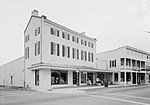
The Robert Smalls House is a historic house at 511 Prince Street in Beaufort, South Carolina. Built in 1843 and altered several times, the house was designated a National Historic Landmark in 1974 for its association with Robert Smalls (1839-1915). Smalls, born into slavery, achieved notice for commandeering the CSS Planter and sailing her to freedom during the American Civil War. After the war he represented South Carolina in the United States House of Representatives during Reconstruction.

Excerpt from the Wikipedia article Robert Smalls House (License: CC BY-SA 3.0, Authors, Images).

Robert Smalls House
Prince Street,

Geographical coordinates (GPS) Address Nearby Places
placeShow on map

Wikipedia: Robert Smalls HouseContinue reading on Wikipedia

Geographical coordinates (GPS)

Latitude Longitude
N 32.435277777778 ° E -80.668333333333 °
placeShow on map

Address

Prince Street 527
29902
South Carolina, United States
mapOpen on Google Maps

Robert Smalls House (Beaufort, South Carolina)
Share experience

Nearby Places

Beaufort Historic District (Beaufort, South Carolina)

Beaufort Historic District is a historic district in Beaufort, South Carolina. It was listed on the National Register of Historic Places in 1969, and was declared a National Historic Landmark in 1973.The historic district is renowned for its impressive collection of antebellum architecture that reflect the Federal, neoclassical, and Greek revival styles that were popular during the interwar period, along with the widespread use of tabby. A variety of homes, gardens, commercial buildings, houses of worship and graveyards are featured in the district, with some sites open for public inspection. Continuous efforts at rehabilitation and conservation underline the community's commitment to maintaining the historic nature of the district, which has attracted much acclaim and garnered popularity from visitors and media outlets. The district's condition has been assessed several times since it was listed in 1969, and in 1998 the National Park Service proposed listing the district as "threatened" due to an ongoing gradual loss of historic integrity. Partly in reaction to this, the district's significance was broadened to include a distinctive historical element of post-Civil War history. The Port Royal Experiment, centered in Beaufort, involved a large-scale redistribution of land from large landowners to former African-American slaves in an effort to assimilate the freed slaves into a modern post-war society. This Reconstruction-era effort had a marked impact on Beaufort's built environment, and is still evident in the surviving buildings.