place

Blue Penny Museum

African building and structure stubsAfrican museum stubsMauritius stubsMuseums established in 2001Museums in Mauritius
Philatelic museumsPhilately of MauritiusPost and philately stubs
Blue Penny Museum
Blue Penny Museum

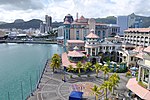
The Blue Penny Museum a museum dedicated to history and art of Mauritius, is situated at Caudan Waterfront in Port Louis, the capital of Mauritius. It opened in November 2001.The museum collection includes the 1847 Blue Penny and Red Penny stamps. The stamps were bought in 1993 for $2,000,000 by a consortium of Mauritian enterprises headed by The Mauritius Commercial Bank and brought back to Mauritius after almost 150 years. For conservation, the originals are illuminated only temporarily. Most of the time only copies are to be seen. The museum, founded by The Mauritius Commercial Bank, also houses the original statue of Paul and Virginia, created in 1881 by Prosper d'Épinay.

Excerpt from the Wikipedia article Blue Penny Museum (License: CC BY-SA 3.0, Authors, Images).

Blue Penny Museum
Caudan Waterfront Road, Port Louis

Geographical coordinates (GPS) Address Website External links Nearby Places
placeShow on map

Wikipedia: Blue Penny MuseumContinue reading on Wikipedia

Geographical coordinates (GPS)

Latitude Longitude
N -20.1609 ° E 57.4975 °
placeShow on map

Address

Blue Penny Museum

Caudan Waterfront Road
11307 Port Louis
Port Louis, Mauritius
mapOpen on Google Maps

Website
bluepennymuseum.com

linkVisit website

linkWikiData (Q495247)
linkOpenStreetMap (380468499)

Blue Penny Museum
Blue Penny Museum
Share experience

Nearby Places

Aapravasi Ghat
Aapravasi Ghat

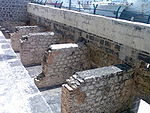
The Immigration Depot (Hindi: आप्रवासी घाट, ISO: Āpravāsī Ghāta) is a building complex located in Port Louis on the Indian Ocean island of Mauritius, the first British colony to receive indentured, or contracted, labour workforce from many countries. From 1849 to 1923, half a million Indian indentured labourers passed through the Immigration Depot, to be transported to plantations throughout the British Empire. The large-scale migration of the labourers left an indelible mark on the societies of many former British colonies, with Indians constituting a substantial proportion of their national populations. In Mauritius alone, 68 percent of the current total population is of Indian ancestry. The Immigration Depot has thus become an important reference point in the history and cultural identity of Mauritius. Unchecked infrastructural development in the mid-20th century means that only the partial remains of three stone buildings from the entire complex have survived. These are now protected as a national monument, under the Mauritian national heritage legislation. The Immigration Depot's role in social history was recognized by UNESCO when it was declared a World Heritage Site in 2006. The site is under the management of the Aapravasi Ghat Trust Fund. Conservation efforts are underway to restore the fragile buildings to their 1860s state. It is one of two World Heritage Sites in Mauritius, along with Le Morne Brabant.