place

TAP Air Portugal Flight 425

1977 in PortugalAccidents and incidents involving the Boeing 727Airliner accidents and incidents caused by weatherAirliner accidents and incidents involving runway overrunsAviation accidents and incidents in 1977
Aviation accidents and incidents in PortugalNovember 1977 events in EuropePages with unreviewed translationsTAP Air Portugal accidents and incidents
TAP Portugal Boeing 727 282Adv CS TBR

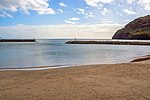
TAP Flight 425 was a regular flight from Brussels, Belgium, to Santa Catarina Airport (informally known as Funchal Airport or Madeira Airport; now the Cristiano Ronaldo International Airport), Portugal, with an intermediate scheduled stop in Lisbon. On November 19, 1977, the Boeing 727 operating the service overran the airport's runway before crashing onto the nearby beach and exploding, killing 131 of the 164 people on board. It remains TAP's only fatal accident in its history.

Excerpt from the Wikipedia article TAP Air Portugal Flight 425 (License: CC BY-SA 3.0, Authors, Images).

TAP Air Portugal Flight 425
VR 1, Santa Cruz

Geographical coordinates (GPS) Address Nearby Places
placeShow on map

Wikipedia: TAP Air Portugal Flight 425Continue reading on Wikipedia

Geographical coordinates (GPS)

Latitude Longitude
N 32.688055555556 ° E -16.785555555556 °
placeShow on map

Address

Porto de Recreio Santa Cruz

VR 1
9100-163 Santa Cruz (Santa Cruz)
Portugal
mapOpen on Google Maps

TAP Portugal Boeing 727 282Adv CS TBR
Share experience

Nearby Places

Madeira Airport
Madeira Airport

Madeira Airport (Portuguese: Aeroporto da Madeira, IATA: FNC, ICAO: LPMA), informally Funchal Airport (Aeroporto do Funchal), formally Santa Catarina Airport (Aeroporto de Santa Catarina) and officially Cristiano Ronaldo International Airport, is an international airport in the civil parish of Santa Cruz in the Portuguese archipelago and autonomous region of Madeira. The airport is located 13.2 km (8.2 mi) east-northeast of the regional capital, Funchal, after which it is sometimes informally named. It mostly hosts flights to European metropolitan destinations due to Madeira's importance as a leisure destination, and is pivotal in the movement of cargo in and out of the archipelago of Madeira. It is the fourth-busiest airport in Portugal. The airport is named after Madeiran native Cristiano Ronaldo, who is widely considered to be one of the greatest footballers of all time. During its renaming ceremony in 2017, the airport drew media notoriety for an infamous bust of Ronaldo unveiled at the ceremony, now replaced.The airport is considered one of the most peculiarly perilous airports in the world due to its location and its spectacular runway construction. It received the Outstanding Structure Award in 2004 by the International Association for Bridge and Structural Engineering. The History Channel program Most Extreme Airports ranked it as the ninth most dangerous airport in the world and the third most dangerous in Europe. Pilots must undergo additional training to land at the airport.

SA de Transport Aérien Flight 730

SA de Transport Aérien Flight 730 was a Sud Aviation SE-210 Caravelle 10R aircraft, registered as HB-ICK, that crashed on approach to Funchal Airport, Madeira, on December 18, 1977. The flight crew consisted of two captains. The pilot in command had never previously landed at Funchal and was being trained to operate from the notoriously difficult airport by the other, more experienced captain, who was acting as co-pilot. The training was intended to take place during daytime, but due to a delay the aircraft reached its destination after dark. The non-scheduled flight departed from Zurich, making its first stop at Geneva Cointrin International Airport at 14:30 UTC. While at Geneva, the aircraft's departure to Funchal was delayed due to a hydraulic pump failure, and it finally took off at 16:26. At 19:38, the crew contacted Madeira control tower when they were at the ROSE reporting point at 33,000 feet (10,000 m), and were cleared to descend to 5,000 ft (1,500 m). At 19:55, the crew reported overflying Porto Santo island at 8,500 ft (2,600 m) and were instructed to continue their descent to 5000 ft and then to contact Funchal approach control. At 19:57, Funchal cleared the crew to descend to 3,500 ft (1,100 m) and informed them that the QNH was 1014.0 hpa. After being cleared for the approach the crew descended below the 720 ft (220 m) permitted during circling, even though they had lost sight of the runway. The aircraft had its landing gear down and the flaps were extended to 20 degrees when it crashed into the water. Thirty-five passengers and one hostess lost their lives, many becoming trapped inside the sinking fuselage. The remaining passengers and crew, including both pilots, were rescued by local fisherman and rescue teams, or swam to the nearby shore. The cause of the accident was attributed to pilot error, due to lack of coordination between the pilots, and to sensorial illusion. It was the second fatal air crash in a month at Funchal. On November 19, TAP Portugal Flight 425 had crashed at the airport, killing 131 people.